Why Great Video Editing Is More Than Just Cutting Clips
5 min read
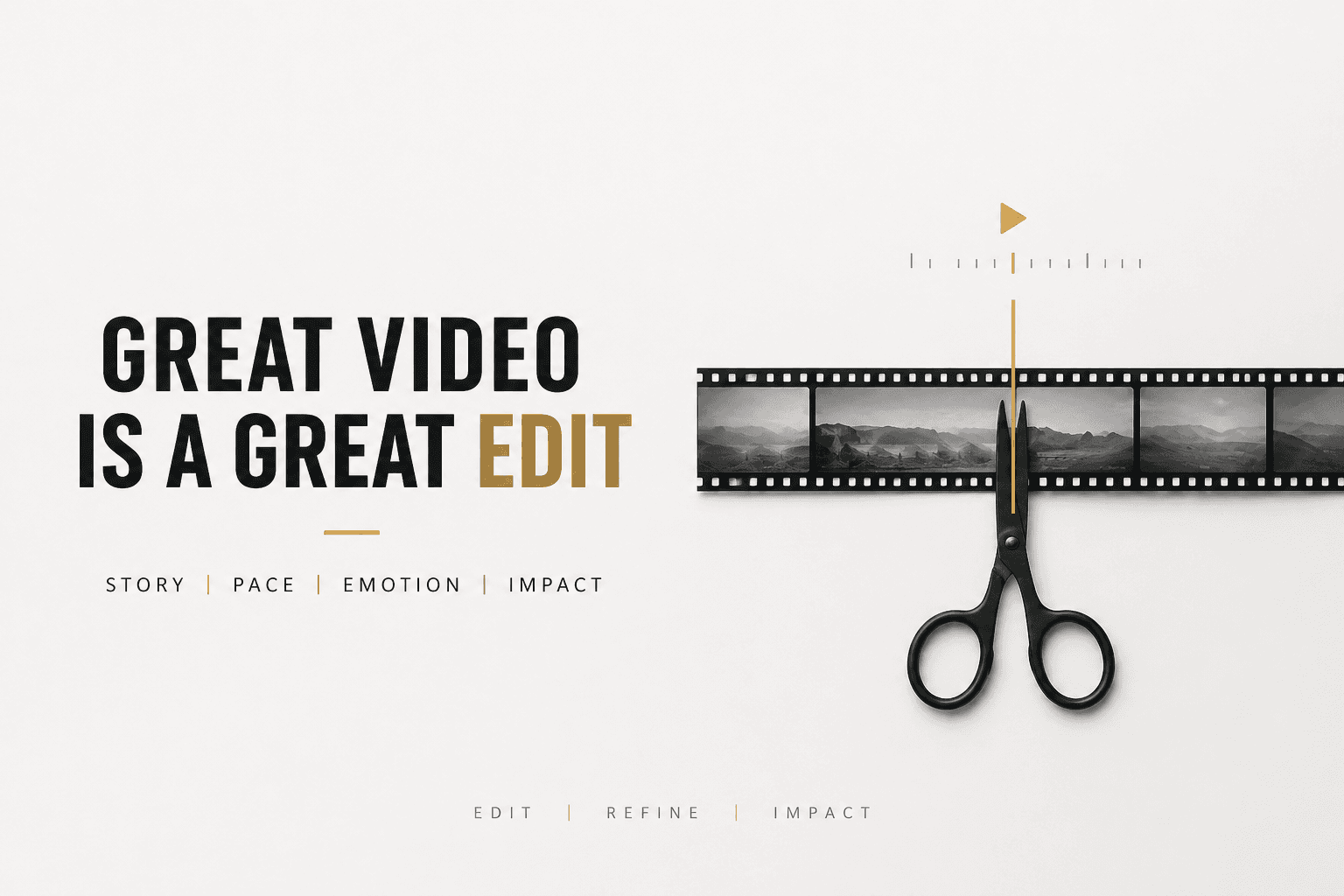
Video editing is one of the most misunderstood creative professions in the digital world. To outsiders, it often looks simple: cut clips, add transitions, sync music, maybe sharpen the colors, export, done. But anyone who has truly spent time inside the craft knows that editing has never been about software alone. It is not about pressing buttons. It is not about flashy effects. And it is definitely not just about making footage look polished.
Real editing is about perception.
It is the art of shaping how people feel, what they notice, what they remember, and whether they stay long enough to care.
The camera captures moments. The editor gives those moments meaning.
That distinction is what separates content from cinema, noise from narrative, and ordinary visuals from work that actually moves people.
In today’s attention economy, where every scroll is a decision and every second is a battle, video editing has evolved far beyond post-production. It has become one of the most powerful forms of communication in modern media. Whether it is a brand film, a viral short-form reel, a YouTube documentary, or a product launch campaign, the difference between something ignored and something unforgettable often comes down to editing.
Not because editing saves bad content.
But because editing determines how good content is experienced.
This is where many people misunderstand the profession. They assume great footage automatically creates great videos. In reality, raw footage is potential, not impact. Without structure, pacing, and emotional control, even the best visuals can feel lifeless. A powerful editor understands that storytelling does not happen when the camera stops rolling—it often truly begins when the timeline opens.
Every cut carries intention.
A cut can create urgency. A pause can build tension. A sound effect can amplify emotion. A silence can say more than dialogue ever could.
This is why editing is often closer to psychology than technology.
The best editors are constantly asking invisible questions: What should the viewer feel right now? What information should be revealed next? When should tension rise? When should it breathe? How do we stop the scroll before the thumb moves?
These questions matter more today than ever because digital platforms changed the rules. Social media did not kill storytelling—it compressed it. Audiences still crave emotion, meaning, and connection, but now creators often have seconds, not minutes, to earn attention. The first three seconds can determine whether a viewer stays or disappears.
That reality transformed editors into strategists.
Modern editing is no longer only about aesthetics. It is about retention. Performance. Audience behavior. Platform psychology.
A beautifully edited video that loses viewers in five seconds failed its purpose.
A strategically crafted video that hooks instantly, builds curiosity, and holds attention is doing something much more valuable: it understands both story and system.
This is why the rise of short-form content did not reduce the value of editing—it increased it. The challenge became harder. Editors now need to compress narrative, emotion, and branding into smaller windows without losing authenticity. That requires precision.
And precision is where mastery begins.
One of the biggest mistakes in the creative industry is confusing effects with excellence. Motion graphics, speed ramps, transitions, and VFX are tools, not storytelling. They can enhance a message, but they cannot replace one. Too often, creators overload videos with visual tricks and forget the most important question:
Why should anyone care?
A transition may impress someone for a second. A story can stay with them for years.
This is why the most powerful edits are often not the loudest ones. They are the ones with control. They know when to push and when to hold back. They understand that visual intensity without emotional depth is just decoration.
The strongest editors think like directors but execute like architects.
They build emotional journeys.
For brands, this matters deeply. Modern consumers are exposed to endless marketing every day. Traditional selling alone is losing power because people do not just buy products anymore—they buy identity, trust, and feeling. A product video that simply explains features may inform, but a story-driven campaign that creates aspiration, emotion, or belonging will almost always resonate harder.
This is where editing becomes business-critical.
A skilled editor does not just make content look expensive. They make audiences believe.
They shape perception around founders, products, campaigns, and personal brands. They can turn a startup into something premium, a creator into something iconic, or a message into something unforgettable.
That is why elite editing sits at the intersection of art and conversion.
And perhaps that is the real future of the profession.
As AI tools, templates, and automation become more common, technical barriers will continue to drop. More people will be able to create acceptable videos. But acceptable is not memorable. The future will not belong to those who can simply edit faster.
It will belong to those who understand human attention better.
Because while tools evolve, psychology remains.
People still remember how something made them feel. They still respond to tension, rhythm, beauty, surprise, and authenticity. They still stay for stories that understand them.
This is why exceptional editors will continue to stand apart—not because they know more shortcuts, but because they know more about people.
They understand that every frame is a choice. Every second is earned. And every project, no matter how commercial, is ultimately about connection.
Video editing was never just about cutting clips together.
It has always been about building experiences that people do not simply watch—but feel.
And in a world flooded with content, feeling something is what makes people stay.
Related posts
May 6, 2026
ok so who even is Swikrit? (my actual origin story)
From editing vlogs on my mom's phone in class 4 to working with real clients worldwide. Here's the full unfiltered story of how I got into video editing and never looked back.
Read articleApr 30, 2026
From Raw Footage to Real Impact: How I Think About Video Editing
A behind-the-scenes look into how cinematic editing is built with intention, focusing on storytelling, pacing, sound, and motion design rather than effects alone. This article breaks down how raw footage is transformed into structured, emotional, and performance-driven video content.
Read article